YES Middle School
Engineering Landing Pads
Students prepare for the future of drone deliveries by engineering a cushioned landing pad that absorbs kinetic energy during a collision with a dropped item.


unit Overview
Students use the Engineering Design Process to design a reusable landing pad optimized to protect a package dropped from a height. Students learn about kinetic energy transfer and how changing a material’s shape or configuration can increase the amount of kinetic energy it absorbs during a collision.
- 8 lessons
- 45–55 minutes per lesson
- 2 computer science modules: Bounce Height Measurements and Delivery Notification Systems
- Student materials available in Spanish
Standards Alignment
YES units align with state and national science standards, integrating seamlessly with popular middle school science curricula.
unit Resources
Digital Resources (FREE)
YES provides these materials free of charge! Use the link below to download resources from our Google Drive.
Download ResourcesPurchase Materials
- Full-color print educator guide, plus multiple sets of heavy-duty reusable color-print resources (ex. vocabulary cards, materials glossaries, station signs, and student instructions) for the class.
- Hands-on materials to support 24 learners.
- Supplements Materials Kit to serve up to 24 more students.
Unit Map
Teacher Preparation Videos
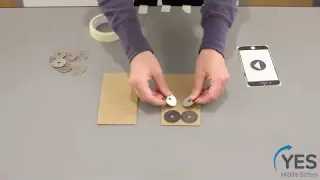

Lesson 1 Preparation: Model Phone
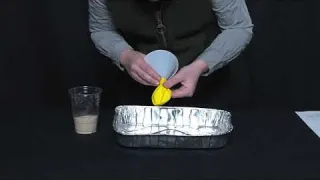
Lesson 4 Preparation: Sand-Filled Balloon
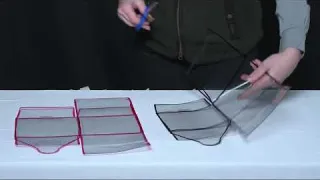
Lesson 5 Preparation: Landing Pad Box
Videos for Students
Lesson 3: Bounce Height Investigation
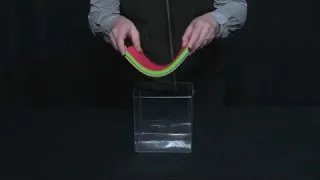
Lesson 4: Deformation Investigation
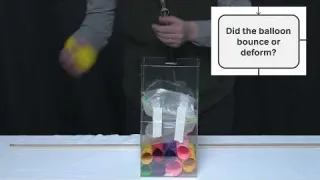
Lesson 6: Optimize for Mass
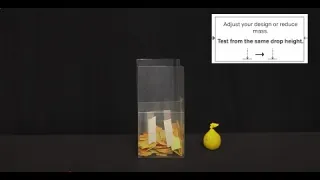
Lesson 7: Optimize for Height
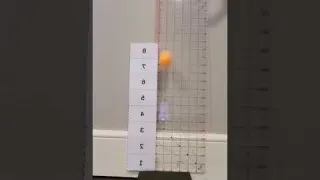
Ball Drop on Thick Foam
Our funders
Major support for this project has been provided by MathWorks.
Bounce Height Measurements
Extend learning with this computer science module designed to be taught after Engineering Landing Pads. Students learn how a computer can be used to measure how high a ping-pong ball bounces on different landing pad materials. Students discuss how the computer algorithm and investigation procedure must work together to collect reliable data.
Delivery Notification Systems
Extend learning with this computer science module designed to be taught after Engineering Landing Pads. Students program micro:bits to send and receive radio signals. They apply this skill to create and test an algorithm to notify recipients that they have received a package. Teams improve their system to distinguish between urgent and nonurgent deliveries.