YES Middle School
Engineering Eco-friendly Slippers
Students investigate balanced and unbalanced forces with a focus on friction as they engineer an eco-friendly slipper with a safe amount of traction.
unit Overview
Students use the Engineering Design Process to design an affordable, eco-friendly slipper prototype that provides consumers with a safe amount of traction. Students learn about the force of friction between different outsole materials and vinyl flooring.
- 9 engineering lessons
- 45 minutes per lesson
- 2 computer science modules: User Reviews Analysis and Step Counters
- Student materials available in Spanish
Standards Alignment
YES units align with state and national science standards, integrating seamlessly with popular middle school science curricula.
unit Resources
Digital Resources (FREE)
YES provides these materials free of charge! Use the link below to download resources from our Google Drive.
Download ResourcesPurchase Materials
- Full-color print educator guide, plus multiple sets of heavy-duty reusable color-print resources (ex. vocabulary cards, materials glossaries, station signs, and student instructions) for the class.
- Hands-on materials to support 24 learners.
- Supplements Materials Kit to serve up to 24 more students.
Unit Map
Teacher Preparation Videos
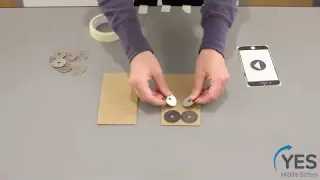

Lesson 1 Preparation: Model Phone
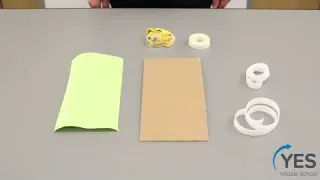
Lesson 3 Preparation: Outsole
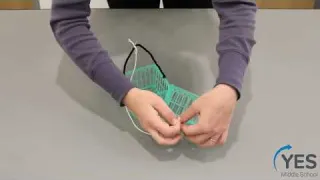
Lesson 4 Preparation: Traction Test Station Part 1
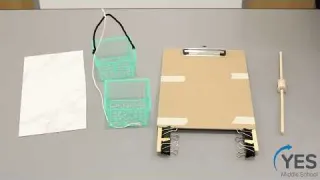
Lesson 4 Preparation: Traction Test Station Part 2
Videos for Students

Lesson 2: The Problem

Lesson 4: Using Data for Design Decisions
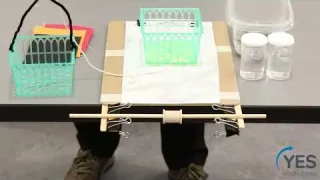
Lesson 4: Traction Test Procedure
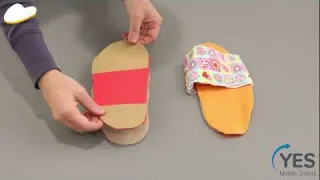
Lesson 6: Making a Slipper
Our funders
Major support for this project has been provided by MathWorks.
User Reviews Analysis
Extend learning with this computer science module designed to be taught after Engineering Eco-friendly Slippers. Students consider how a computer could be used to analyze qualitative data collected from slipper users. Students explore and modify a simple machine learning algorithm that categorizes user reviews as positive or negative.
Step Counters
Extend learning with this computer science module designed to be taught after Engineering Eco-friendly Slippers. Students consider how the durability of a product factors into its eco-friendliness and explore how a step counter could be a helpful computational tool for evaluating a slipper’s durability. They develop and build a step counting algorithm using MakeCode and iterate the algorithm to optimize it for different users.